SEO
Local SEO in Morocco: How to Get Your Business Found on Google
Improve local discovery in Morocco with an accurate Google Business Profile, useful service pages, genuine reviews and a measurable enquiry journey.

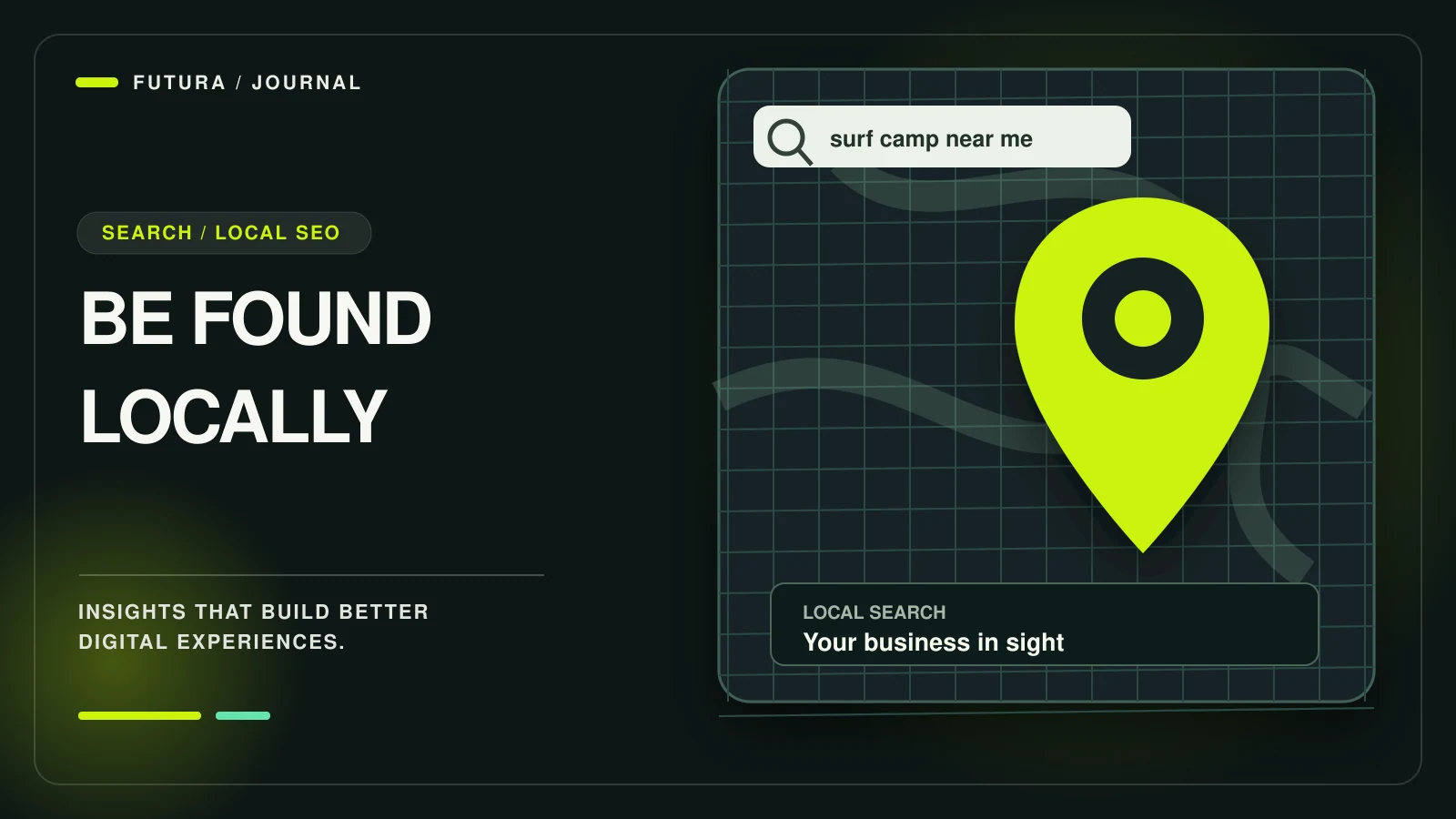
Local SEO helps a business appear for searches tied to a place and a genuine local need. In Morocco, start with an eligible, accurate Google Business Profile, useful service information on your website and consistent customer-facing details. Then measure relevant enquiries rather than treating a map position as the whole result.
A local restaurant, a clinic and a service-area contractor do not need identical tactics. Their eligibility, customer journeys and evidence of geographic relevance differ. A website should reflect the business that actually exists; an address or service area must not be invented to target another city.
Google’s local-ranking guidance describes relevance, distance and prominence as important factors. You can improve information quality and usefulness, but you cannot turn every searcher into a nearby customer or buy a guaranteed organic map position.
- Keep the profile and website truthful and consistent.
- Build location content only where it adds real customer value.
- Measure relevant enquiries rather than a promised map position.
Start with the customer’s real local question
Write down the service and situation customers describe: a surf lesson near Tamraght, a meeting venue in Rabat or a repair service available in a particular area. Ask staff which questions recur before an enquiry becomes a booking.
Review the actual search results for those needs in the languages your customers use. Note whether the result is dominated by maps, directories, booking platforms or business websites. An Arabic query and a French query may express different expectations, even when they refer to the same service.
Do not turn this exercise into a spreadsheet of invented demand. Search Console can reveal queries that already expose your website, but it does not reveal the complete market. Use those observations to choose useful pages and identify questions your current content fails to answer.
Make your Google Business Profile accurate and eligible
Use the genuine business name, correct category, current contact information and operating hours. Review Google’s business representation guidelines before creating a listing or changing an address. Online-only businesses, virtual arrangements and service-area operations need careful eligibility review.
Choose the most accurate category rather than the most attractive-sounding keyword. Add services, photographs and practical information that help a customer decide whether the business fits their need. Keep seasonal hours and temporary closures current.
A service area describes where you operate; it is not permission to create a fictional office in every target city. If customers do not visit your address, follow the current service-area guidance rather than displaying a misleading storefront location.
Build service pages that demonstrate geographic relevance
A useful service page explains what is offered, who it is for, where it is available and how to proceed. Include constraints that matter: coverage boundaries, access arrangements, required information or seasonal availability, where accurate.
Create a separate location page only when you have meaningful information for that location. Copying one paragraph and replacing “Casablanca” with “Marrakech” does not explain a different customer experience. Real local details might include distinct access instructions, a staffed branch, a genuine team or an operational service boundary.
For bilingual sites, keep each language complete and navigable. Do not create thin translated location pages solely to multiply keywords. Our English–French SEO structure guide explains the URL and language relationships; this article focuses on local business relevance.
Connect the profile and website without creating confusion
Use a relevant, working landing page for the website link. Check that the name, address where applicable, telephone number and customer-facing hours agree across the profile, website and important business directories.
A small mismatch is not automatically a penalty, but contradictory information can send customers to the wrong place. Prioritize the sources customers actually use. Correct a closed office or obsolete number before spending time on low-value directory submissions.
Add structured data only for facts visible and accurate on the website. Google’s LocalBusiness documentation is a technical reference, not permission to invent an address, rating or branch. Markup does not establish Business Profile eligibility or guarantee a special search display.
Earn and manage reviews honestly
Invite genuine customers to describe their experience through an appropriate process. Respond professionally and address specific issues without exposing private customer information. The aim is a useful record of real experiences, not a perfect-looking rating manufactured by the business.
Do not buy reviews, invent reviewers or condition a benefit on a positive review. Review requests and incentives must follow Google’s current policies. Staff should understand who can request feedback, when to do it and how complaints are handled.
Use feedback as operating evidence. Repeated confusion about parking, pickup, booking confirmation or response handling can point to website improvements. A clearer journey may reduce avoidable support work even before any search visibility changes.
Check the technical path to an enquiry
Local relevance cannot help a customer use a broken page. Confirm that important URLs return 200, have appropriate canonical URLs, are crawlable and are intended to be indexed. Avoid blocking a page in robots.txt while expecting Google to read a noindex directive on it.
On mobile, test click-to-call links, directions where appropriate, visible opening hours and the enquiry form. Use an approved test process to confirm delivery; do not assume a success message proves that an inbox or CRM received the enquiry.
If performance is a concern, use our Core Web Vitals guide to investigate representative pages. Speed supports usability, but it does not override inaccurate local information.
Turn observations into a monthly improvement plan
| Observation | A useful investigation | A meaningful outcome |
|---|---|---|
| The profile gets attention but enquiries are weak | Compare the offer and landing page with the query | More relevant, understood enquiries |
| Customers ask where to go | Check address, access details and directions | Fewer avoidable arrival problems |
| A service appears for irrelevant searches | Review categories, copy and service scope | Better match between query and offer |
| A location page has little unique value | Check whether it represents a real operation | Consolidated or genuinely useful content |
Keep a change log. Record what you changed, which pages or profile fields were affected and the period you will compare. Seasonality, business changes and query mix can influence the result, so avoid attributing every movement to one edit.
A sensible first improvement cycle
Verify profile ownership and eligibility, correct customer-facing information, improve the highest-value service page and test its conversion path. Then use current Search Console and business records to choose the next improvement. Local SEO is easier to manage when each task has a clear customer benefit and an observable result.
For supplier evaluation, the Morocco agency-selection guide includes questions about ownership, technical work and realistic SEO commitments.
A well-structured business website can make local service information easier to find and act on.
FAQ
Common questions
Can I rank in every Moroccan city with one Business Profile?
Do not expect that. Local results depend partly on the searcher’s location and the business’s real relevance. Describe genuine coverage and follow profile eligibility rules rather than creating fictional locations.
Do I need a separate page for each neighborhood?
Only when the page provides distinct useful information. Near-identical pages that simply exchange location names are a weak substitute for a genuinely informative service page.
Does structured data guarantee a Google Maps listing?
No. Website markup and Business Profile eligibility are different things. Structured data should describe real visible facts and does not guarantee a particular search appearance.
Should I buy reviews to compete with larger businesses?
No. Use genuine customer feedback and follow platform policies. Purchased or fabricated reviews mislead customers and can create platform and reputational problems.
How soon will local SEO produce results?
There is no universal timeline. Correct urgent customer-facing errors immediately, then monitor relevant visibility and enquiries over a sensible comparison period without promising rankings.
Sources
Primary sources for the claims above, last checked on 2026-10-16.
- Improve local ranking — Google Business Profile
- Business representation guidelines — Google Business Profile
- LocalBusiness structured data — Google Search Central
Have a project in mind?
Improve your local customer journey
Share your goals and requirements with Futura. A team member can assess the scope; no automatic quotation or outcome is promised.
Discuss your project